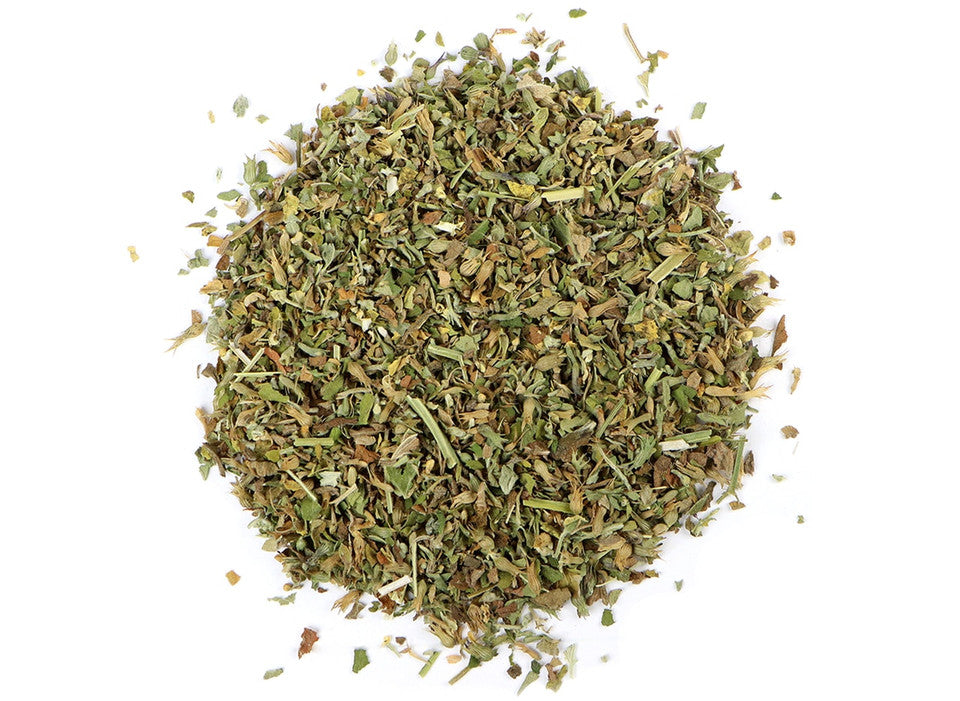
Catnip
Catnip
Catnip is well known for its gentle and calming properties as it has been employed in traditional western folk practices for centuries. Nepeta cataria is a member of the mint family and features a square stem, heart-shaped leaves, and small fragrant pink to white flowers on a terminal spike. The leaves can be tinctured, steeped into a relaxing catnip tea, and added to herbal tea blends.
The ultimate feline herb, for centuries cats have been going crazy over this plant. It makes them happy and spunky yet has a more calming effect on people. Catnip has been used in European folk medicine for generations as a calming agent for body and mind. It is gentle and is very useful for children and infants.
Used in traditional medicine in Europe for centuries, and first mentioned in the poetic 11th century herbal, De viribus herbarum, catnip was prized for its ability to calm occasional nervousness and promote restful sleep. It was employed as a relaxant and diaphoretic and was thus helpful in cases of occasional restlessness Considered extremely useful for children, it was often used to support healthy digestion and soothe the stomach. Further, it was applied externally as a poultice. Catnip may be made into a juice too for topical application as was the practice by Nicholas Culpepper (a 17th century botanist, avid astrologer, physician, and herbalist). It is mainly the flowering tops, dried for tea or fresh as an essential oil that are used, but there are accounts of the root being used too. According to Maude Grieve, author of A Modern Herbal (which isn't really that modern anymore as it was published in 1931) the root can be overstimulating, so perhaps its best to stick with the above ground parts. The leaves and young shoots were added to sauces and stews for flavor (which somewhat resemble a mix of mint and pennyroyal).
We recommend that you consult with a qualified healthcare practitioner before using herbal products, particularly if you are pregnant, nursing, or on any medications.
Herbal Medicine does not take the place of a medical doctor.
Conventional care and herbal care are quite complementary of each other when done with intention, so it is very important to be transparent with all of your chosen health practitioners about the different medications and herbs you take.
This information has not been evaluated by the Food and Drug Administration. This product is not intended to diagnose, treat, cure, or prevent any disease. For educational purposes only.
This information has not been evaluated by the Food and Drug Administration. This product is not intended to diagnose, treat, cure, or prevent any disease. For educational purposes only.
Couldn't load pickup availability
Low stock: 6 left
View full details